
A Rural Corner of Arvada
On the northwestern edge of the Arvada area, Meadow Wood Farms feels like a reminder of an earlier Jefferson County—one shaped by open ground, irrigation water, horses, family farms, and long views toward the Front Range. Although the community is associated with Arvada and carries an Arvada mailing address, Meadow Wood Farms is an unincorporated community in Jefferson County rather than a formally incorporated city neighborhood. It lies near West 77th Place, McIntyre Street, Quaker Street, Leyden, and the larger countryside west of the city. ([countyoffice.org](https://www.countyoffice.org/property-record-16155-w-77th-pl-arvada-co-80007-017/?utm_source=openai))
Today, the neighborhood is known for spacious properties, mature trees, mountain views, barns, paddocks, and a quiet rural atmosphere. That combination makes Meadow Wood Farms distinctive in a metropolitan area where development has steadily become denser. Its history is not told through a single grand civic building or a famous downtown street. Instead, it lives in the land itself—in broad lots, old agricultural patterns, equestrian uses, and the continuing sense that residents are caretakers of a rural landscape.
Before the Neighborhood: Farms Along Ralston Creek
Meadow Wood Farms is part of a much older agricultural story. Arvada’s earliest history began in 1850, when Lewis Ralston and a wagon party paused near the meeting of Clear Creek and what became known as Ralston Creek. Although gold brought many newcomers to the region, numerous prospectors eventually turned to farming. By 1860, more than thirty land claims had been filed in the Ralston and Clear Creek valleys. ([arvadaco.gov](https://www.arvadaco.gov/589/The-Founding-of-Our-Community?utm_source=openai))
The surrounding countryside proved well suited to agriculture. Farmers raised wheat, corn, oats, vegetables, berries, melons, cherries, and celery. Irrigation ditches transformed the valley into some of the most productive farmland near Denver, and Arvada later became known as the “celery capital of the world.” That agricultural tradition extended beyond the original town center into the broad rural areas that now include communities west and northwest of Arvada.
The land around present-day Meadow Wood Farms was historically part of a patchwork of farms, ranches, and open acreage. Some properties were devoted to crops; others supported livestock, orchards, or family homesteads. Even as the Denver metropolitan area expanded, portions of this landscape remained large-lot country.
How Meadow Wood Farms Got Its Name
The precise origin of the Meadow Wood Farms name is not widely documented in publicly available local histories. Unlike Arvada itself—which was named by Mary Ann Wadsworth for her brother-in-law, Hiram Arvada Haskins—the name Meadow Wood Farms appears to reflect the character of the land rather than a single historical figure. ([arvadaco.gov](https://www.arvadaco.gov/589/The-Founding-of-Our-Community?utm_source=openai))
The name is fitting. “Meadow” suggests the open grassland and pasture that define many properties in the area, while “wood” evokes the cottonwoods, shelterbelts, mature landscaping, and wooded pockets that soften the broad prairie setting. “Farms” preserves the community’s rural identity, even though many modern properties are residential rather than working commercial farms.
In that sense, the name is more than a subdivision label. It describes a way of living—one built around space, privacy, animals, gardens, outbuildings, and a close relationship with the land.
From Agricultural Land to Acreage Community
Meadow Wood Farms took shape during the period when western and northwestern Arvada were transitioning from primarily agricultural land into acreage residential communities. The subdivision records identify Meadow Wood Farms properties in Section 36 of Jefferson County, with many lots measuring roughly an acre or more. Public property records also show Meadow Wood Farms and Meadow Wood Farms Amendment 1 as recognized subdivision names. ([countyoffice.org](https://www.countyoffice.org/property-record-16155-w-77th-pl-arvada-co-80007-017/?utm_source=openai))
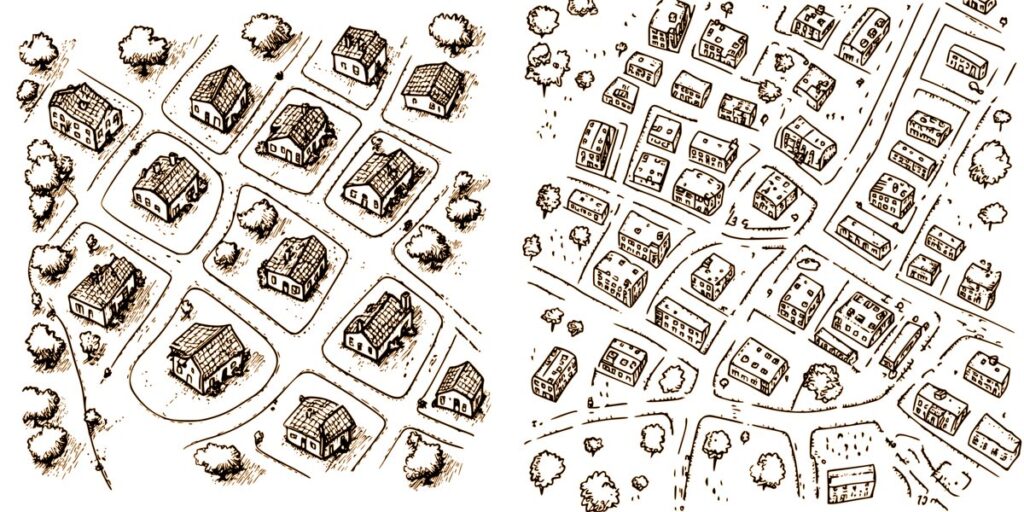
That pattern of development is important. Rather than replacing the countryside with closely spaced houses, the neighborhood preserved a larger-lot format. Homes were built with room for gardens, workshops, detached garages, corrals, and pasture. Some properties include horse facilities, paddocks, loafing sheds, and tack rooms—features that would be unusual in a conventional suburban subdivision. ([coldwellbankerhomes.com](https://www.coldwellbankerhomes.com/co/arvada/15935-w-77th-pl/pid_64185142/?utm_source=openai))
Real-estate records indicate that many homes date from the late twentieth century, including houses built in the 1980s and 1990s. As a result, Meadow Wood Farms reflects a particularly Colorado form of suburban growth: comfortable homes set within an environment that still feels semi-rural.
Nearby Landmarks and Institutions
Meadow Wood Farms does not have a traditional commercial main street, but several nearby landmarks help place it within the larger history of Arvada.
- Leyden remains one of the closest historic rural settlements. Located near Quaker Street and West 82nd Avenue, it reflects the small agricultural communities that once dotted the western edge of the Denver region. ([mapcarta.com](https://mapcarta.com/26647062?utm_source=openai))
- Olde Town Arvada preserves the community’s historic civic and commercial center, with buildings and streets that recall Arvada’s nineteenth- and early twentieth-century development. ([arvadaco.gov](https://www.arvadaco.gov/425/Historic-Neighborhoods?utm_source=openai))
- Ralston Creek and the Ralston Creek Trail connect today’s residents with the waterway that shaped Arvada’s settlement, farming, transportation, and open-space history. The trail now stretches across much of the city, linking parks, ponds, wildlife habitat, and historic landscapes. ([arvadaco.gov](https://www.arvadaco.gov/558/Primary-Trails?utm_source=openai))
- Arvada’s parks and open-space system provides the recreational counterpart to Meadow Wood Farms’ private acreage. The city maintains more than 100 park sites and approximately 150 miles of trails, making nearby countryside and public green space central to the area’s identity. ([arvadaco.gov](https://www.arvadaco.gov/1039/Park-Inventory-and-Amenities?utm_source=openai))
These places show how Meadow Wood Farms fits into a larger continuum. The community may feel quiet and removed, but it remains connected to the same creeks, roads, trails, and agricultural valleys that shaped Arvada from its earliest days.
A Neighborhood That Still Feels Personal
Over the decades, Meadow Wood Farms has evolved without losing its central character. New homes, renovations, landscaping, and updated infrastructure have changed individual properties, but the large lots and rural setting remain essential. Horses are still part of the neighborhood’s visual identity, and residents often value the ability to keep animals, maintain gardens, or simply enjoy a little more elbow room.
The community’s heritage is also carried by everyday routines: riding along neighborhood roads, watching wildlife cross an open field, tending an old cottonwood, or greeting a neighbor from the driveway. These are modest experiences, but together they create a strong sense of place.
What makes Meadow Wood Farms special is not a frozen version of the past. It is the way the past continues to influence the present. The neighborhood has grown from the agricultural landscape of Jefferson County, adapted to suburban change, and retained enough openness to keep that history visible. In a region where development can quickly erase old boundaries, Meadow Wood Farms remains a living example of Arvada’s rural heritage—part farm country, part acreage community, and entirely its own.